

Teaching resource: Providing an Immersive Experience for Teachers

Prof. Ester de Jong and A/Prof. Marianne Turner explain the immersive experiences they have used to help teachers to empathise with multilingual learners, and also to think about what might help to foster these learners’ comfort and understanding in class. This elaborates on their discussion in the first entry for the Multilingual Stance series.
Ester’s Dutch Immersion: Bloemen
The Dutch immersion experience tends to be an experience that, particularly for monolingual English speakers with limited exposure to linguistic diversity, is impactful. I conduct the class in several phases, pausing to allow for reflection on certain aspects of the experience. I typically wear a vest that I can take off and put on to indicate the language we will be using (alternatives may be a scarf, a hat, etc.)
Phase 1. Empathy
For this initial phase, I read a text without showing the text (it’s a book about a girl who plants a seed and sees it grow tall as a sunflower) and without any accommodations for second language learners. I ask common comprehension questions in Dutch (“what is the story about” “what is the girl doing?”). After the first go-round, I note (still in Dutch) that maybe I should read slower or louder. I do this for just a page and, of course, comprehension has not increased.
Discussion. I take off my vest and tell them we can now speak in English. A sound of relief typically follows. I then ask them a few questions to reflect on this experience. Sample questions:
How did this experience make you feel? [typical answers: frustrated, afraid you would call on me, feeling dumb]
What did you do when you realized you didn’t understand the story? [typical answers: tuned out, stopped paying attention and also: trying to figure it out, listening for words that sound similar to English]
Note: I emphasize that, in the United States, by law this kind of submersion (sink or swim) is not allowed – MLs have a right to instruction that responds to their language proficiency needs.
We then brainstorm what I could do to make this more comprehensible for them (as newcomers). We generate strategies and this sets the stage for Phase 2.

Phase 2. Strategy for Newcomers - Total Physical Response
[the vest goes on!] Phase 2 focuses on vocabulary development using Total Physical Response. I teach them the parts of a plant, the names of flowers, and colors in Dutch. I bring in realia: they each are given an (artificial) flower and we use Total Physical Response combined with pictures and labels projected via a powerpoint presentation. I ask them to respond to two basic commands in Dutch: point to the flower/stem/leave/roots; stand up if you have a [name of the flower]; stand up if you have a [color] flower. While doing this, I will use other potential language focus areas in the process without asking for a specific response, e.g., I will count how many people stand up, I will note that the flowers are similar/different, etc.
Discussion. I take off my vest and we debrief. Sample prompts for this phase are these:
What was this experience like? How was it different and what made it different?
What strategies helped you understand what was happening?
How did repetition help this time (and not in Phase ; this gets them to reflect on repetition with and without comprehension).

Phase 3. Extended Language: Peer Interaction
When time permits, I add a phase where I challenge them to work with more extended language and ask them to describe their flower with a pear using sentence stems. I model the dialogue (displayed on a powerpoint slide) with one of the students and then ask them to do the same in pairs. First, they name their own flower and the color and then describe their partner’s flower, name and color. This challenges them to use Dutch productively.
Discussion. The debrief for this phase includes questions like:
How did the sentence stem support your use of Dutch?
How would their experience be different if I had had a “Dutch only” policy?
Final Reflection.
After the completion of the full Dutch immersion activity, I generally ask them to take a moment and write down what this experience was like for them, what they learned, what are they taking away with them for their teaching and working with English language learners.
Marianne’s Spanish Immersion: Los Reyes Católicos
This is a mini-lesson I have delivered to pre-service and in-service mainstream secondary content area teachers who are teaching - or preparing to teach - in linguistically diverse classrooms in Australia. I give the lesson in Spanish because it’s a language that I speak at home. Sometimes teachers will understand Spanish, and I incorporate this knowledge into the experience, but mostly they don’t speak Spanish.
My chosen content area is history and I use a reading comprehension, since this is a common learning activity in Australian secondary classrooms. I use visuals at the beginning of the lesson but the relationship between these visuals and text is not immediately clear (to mirror what can happen in textbooks).
I conduct the lesson in two main phases: the immersive experience and reflection.
Phase 1. Immersive experience
I prepare the teachers for the experience, telling them that I will be delivering a mini-lesson in Spanish, without telling them what it will be about. I let them know that I will not be speaking any English at this time. The teachers can speak English to me, but I will smile and continue speaking in Spanish.
I then deliver the lesson completely in Spanish. I begin with a visual of King Fernando of Aragon and Queen Isabella of Castille, and say that I will be talking about the unification of Spain. I explain the map, focusing particularly on Castille and Aragon just before unification. I speak slowly and point to the relevant visuals.
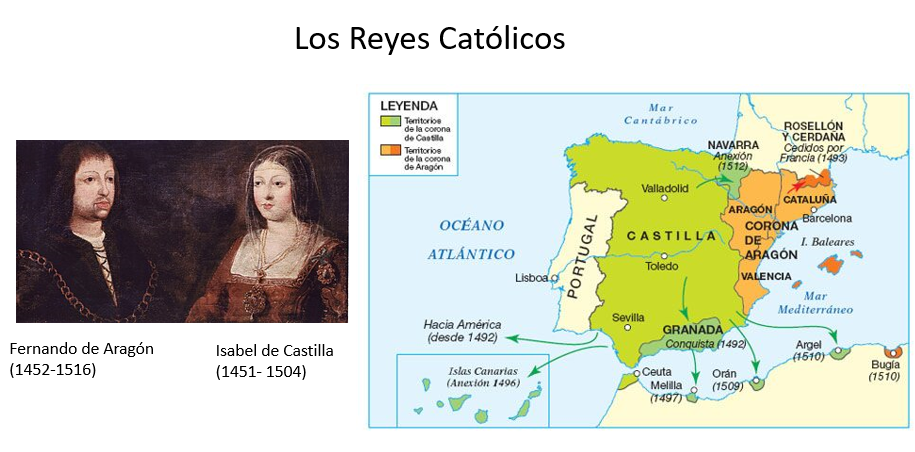
Next, still all in Spanish, I explain the comprehension activity that the teachers will need to complete as I hand out paper copies. I tell them that they need to read and answer the questions, and that they have 10-15 minutes to complete the activity. I walk around the room and, at this stage, teachers often try to engage with me in English, but I smile and repeat the instructions in Spanish.
The most common way that the teachers complete the activity is by talking about it in pairs or groups. There is always a hum of people talking (in English) in the room, never silence. I haven’t either condoned or prohibited groupwork in the instructions, and don’t interfere with this approach. I then ask the teachers to tell me the answers to the comprehension questions, prompting them if they don’t know before telling them the correct response (still all in Spanish).

Phase 2. Reflection
In the reflection stage, I switch to English and ask teachers the following questions:
How did it make you feel? [Typical answers: uncomfortable, embarrassed, nervous that they would be called on to answer; one or two Spanish speakers if present: happy to understand]
What helped you to complete the activity? [Typical answers: problem-solving with classmates, knowing that the order of comprehension questions was likely to follow the same order as the content of the paragraph, similar cognates/words to English]
What helped you to understand the activity? [Typical answer: similar cognates/words to English]
As a class, we talk through the teachers’ responses to the questions. The majority of teachers report feelings of discomfort, embarrassment and nerves. They often say in their professional learning evaluations that this mini-lesson is the most powerful aspect of the course for them.
The main points which I facilitate in our discussion are the way that the teachers were able to help each other work out the answers using a shared language, and that similarities between English and Spanish help them to complete the exercise. Without these two strategies, the activity would have been much harder. Any English-only policy in classrooms in Australia removes the possibility of the first strategy for multilingual learners, and the second strategy is dependent on language background. Students won’t necessarily have recourse to this strategy. Another point that I mention at the end of this phase, if the teachers haven’t yet mentioned it, is the important difference between completing an activity and understanding an activity, and that this is just as important for multilingual learners as for any learners.
