Thinking Historically and Comparatively about Subject English in Australia
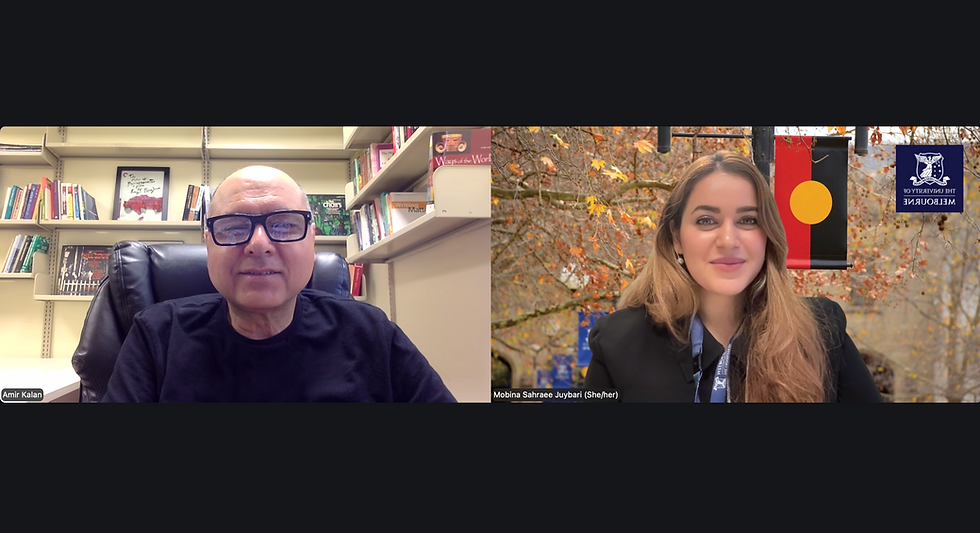
In this interview, Prof. Bill Green (Charles Sturt University) talks to Marianne Turner (Monash University) about the history of subject English in Australia, and the relevance of multilingualism to contemporary English teaching.
Marianne: Bill, thank you so much for joining me today to discuss English in Australian schools. I’d like to begin by asking you how subject English been historically taught in Australia, and how this compares with L1 [first language] or mother tongue education in other countries?
Bill: Thanks, Marianne, it's good to have the opportunity to talk about this. I've been thinking for a long time about English teaching in its historical context. It's really only been a formal subject for just over 100 years in Australia. The first sign of subject English was in early 1905 in primary school. Subject English was also quite new in the States, and in the UK, where it began in the last decade of the 19th century.
I’ve also brought to bear a comparative perspective. In other words, thinking about subject English in relation to other like subjects in other countries. The L1 subjects, such as subject Swedish and subject German. When we think about these subjects, there’s a really important distinction, in my view, between English as the subject and English as the language.
The subjects have been formed and consolidated in relation to a nation and its national language. Our constructions of language are often political constructions, and there's a lot of work that's gone into purifying language. So, you get a version of standard English, a version of standard Swedish, etc.
Marianne: I very much enjoyed reading about that comparative perspective in the book you co-edited Rethinking L1 Education in a Global Era (2020). When you said that subject English has a very short history, I was wondering whether that history is related to state education: whether it was linked to nation-states educating the public more widely.
Bill: The connection is very real. Australia officially became a nation in 1901. The building of the nation-states, as you know, was really from the latter part of the 18th century and the full range of the 19th century. The question of language is central to the construction of nation-states because a national language acts as a unifier, a common tongue, that masks a lot of enduring differences and conflicts.
Subject English can therefore be considered to be a cornerstone of the school curriculum and, in Australia, we have a strong British influence. The whole question of literature as an art form, but also, as a cultural symbol were strongly connected to nation and empire. This was the basis for early curriculum: literature, writing, and something called language study.
Language study, in practice, was always, grammar, a prescriptive grammar predicated on correctness more than anything else. So, you would have children in schools doing a mix of literary work – of writing or composition – and of language work. The language work was something that you probably experienced as a student. I certainly did: exercises of various kinds across the range of spelling, punctuation, dramatical construction, and so on. That was the norm for most of the 20th century in Australia.
The kids who did better tended to get more of a literary education. The kids from different kinds of social environments tended to get more of a basic, prescriptive language curriculum, a skills curriculum, if you like. So, we had these three things happening – literature, writing and language study – with various degrees of emphasis for a long period of time, probably up until the 60s.
Marianne: Very interesting and yes, I remember the language work! So, in what ways do you think subject English has changed since the 1960s?
Bill: What crystallized in the 60s, particularly in England, was an increasing emphasis on the language of working-class children, with a focus on their speech. There was a growing emphasis on talk, on the learning and development of all kids, really, but it was this disenfranchised group that people started to attend more to and open themselves to. We had a greater focus on the way that language is a resource for learning, to talk your way into meaning, to explore and move in all sorts of directions. This started to open up that whole relationship between speech and writing, which is crucial, and it meant a new focus on the whole realm of the spoken, from the most informal to the more formal.
We started to have classrooms which were less tightly organized in a transmission mode. Teacher out the front, kids in rows. We started to get small group work, classrooms organized in terms of small groups, which became sites of talking and interacting, of drawing on the interim resources, the interim textualities, if you like, in the shaping of meaning: from a kind of looseness to an increasing clarity.
At the same time, there was the influence of new paradigms in literary study with the rise of literary theory and cultural studies, which changed what it meant to study literature, not as a kind of sacred object, but as a way of engaging with and representing the world. Literary study became more oriented to response, to the relationship between readers and writers. There was not one correct, canonic meaning that the teacher had to pour into the students. There was a loosening of the canon, with the rise of children's literature, and what is now called youth adult literature.
Back in the day for me, you might have done some sort of thinking or planning before class, but then you’d go in, sit down, write your composition, hand it in at the end of the period, and it’d get marked. New work in writing pedagogy started to encourage the shaping of text. It adopted a more developmental view of writing.
And then there was language study. This was a bugbear because people didn't really know what to do with language study, other than prescriptive grammar. But there was this growing interest in the language that kids brought with them to school. Where was that language coming from? This was the period when tape-recorders started to be used. Field work was conducted in homes, in the streets, in the community.
I think that was fantastic. There was a program in London called, Language in Use, which was so important in this regard. Michael Halliday was one of the people behind this program, and then he moved to Sydney, as you know. A whole lot of education-focused work developed around his idea of Systemic Functional Linguistics that made the kind of language students were expected to produce in schools much more explicit.
Marianne: English as a subject is quite complex, so it's very helpful to see how these different influences have played a role. It’s also excellent context for my next question, a question close to my heart: how do you think English can be viewed as a multilingual subject, given the linguistic diversity in Australia?
Bill: I think it's fair to say, historically, subject English has been framed monolingually in that it's been tied to a particular notion of the English language: so-called standard Australian English. And it has always been predicated on the propensities and affordances of written language.
It's tended to be, structured according to the logic of written language, even when spoken. So one of the challenges has been to loosen up that notion of English to allow it to be seen as more dynamic, and inclusive of different accents, and different emphases, and so on.
There’s an opportunity for subject English in its language work to be more sensitive to and more supportive of multiplicity and difference within the English language; the English language of the classroom, the English language of the various texts.
Marianne: Absolutely. And do you also see this multiplicity in terms of other languages that students are bringing into the subject English class?
Bill: I think this is something quite new and challenging. We're a multicultural population, and subject English teachers are negotiating a range of students with different language and cultural backgrounds. Teachers who are open to this difference are already seeking to draw on the students’ full repertoire of languages. There's a potential there to document this and then build it into the ongoing renewal of the English curriculum.
I think the whole idea of opening up the English curriculum to an expanded sense of what might count as English textuality makes sense. Not just texts written in English, but increasingly, texts translated into English. For a long while, the dominant source or resource was British, with some American, and smatterings of classical others.
When a text is translated from, say, the German into English, to what extent could we be made more aware of what is involved in an act of translation? Multicultural emphasis in different kinds of textuality is another dimension to allowing and encouraging forms of expression in languages other than English in the English classroom, certainly in the exploratory sense of coming to learn and mean.
Marianne: That point about translation is particularly interesting and I also see that it has a lot of potential in Australian classrooms. So then, given these insights, what is your hope for the subject English curriculum in 21st century Australia, and why?
Bill: I'd like to see continuing engagement with the mutable nature of subject English. I've always encouraged English teachers to think both historically and comparatively. When you do that, you start to better understand the trinity that's enshrined in the current Australian curriculum around language, literacy, and literature. These historical categories are changing categories.
The old ideal was one of maintaining boundaries, purities, and this is being exposed for the fiction that it always was. We're able to think, for instance, of language no longer as a fixed object that has been in place forever.
The whole idea of a single named English language has been challenged. As that kind of insight becomes more part of the professional identities of teachers, these things will change. It's impossible to think of language outside of questions of power, and history. It's always riven with conflict and contestation within the social field.
So, what we need is a much more plural notion of language, literacy, literature. What I would like for subject English is that it continues to be reflexive. It needs to be sensitive to the various challenges that beset it, without being overwhelmed by them. We need a strong profession. We need teachers who are teachers first and foremost, but who are also intellectuals. This may be an impossible ideal. But I think that's what we need to work with as an organizing principle.
Marianne: You’re right, this is an ideal that’s really worth striving for. Thank you, Bill, this has been very thought-provoking. It’s always a pleasure.
Bill: Thank you very much.
Reference
Green, B., & Erixon, P.-O. (Eds.). (2020). Rethinking L1 Education in a Global Era: Understanding the (Post-)National L1 Subjects in New and Difficult Times. Springer. https://doi.org/10.1007/978-3-030-55997-7

Bill Green is Emeritus Professor of Education at Charles Sturt University, NSW, Australia. He has worked extensively in literacy studies and curriculum inquiry, with a particular focus on English curriculum history and theory. Recent publications included Multilingualism as Opportunity, co-edited with Marianne Turner (Routledge, 2026) and Garth Boomer, English Teaching and Curriculum Leadership (Routledge, 2025).